
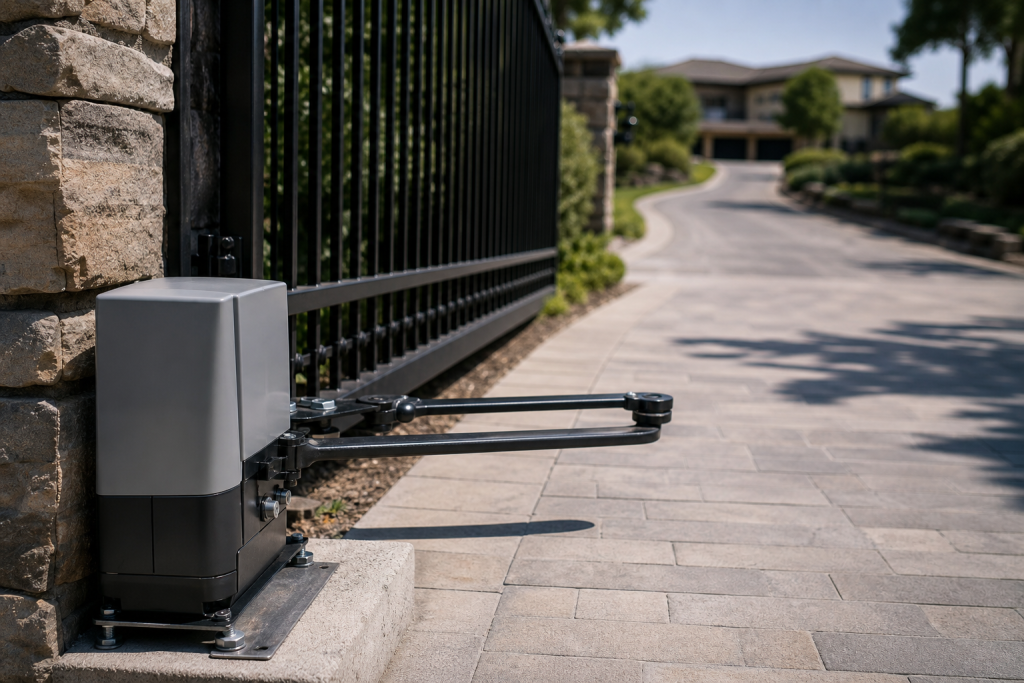
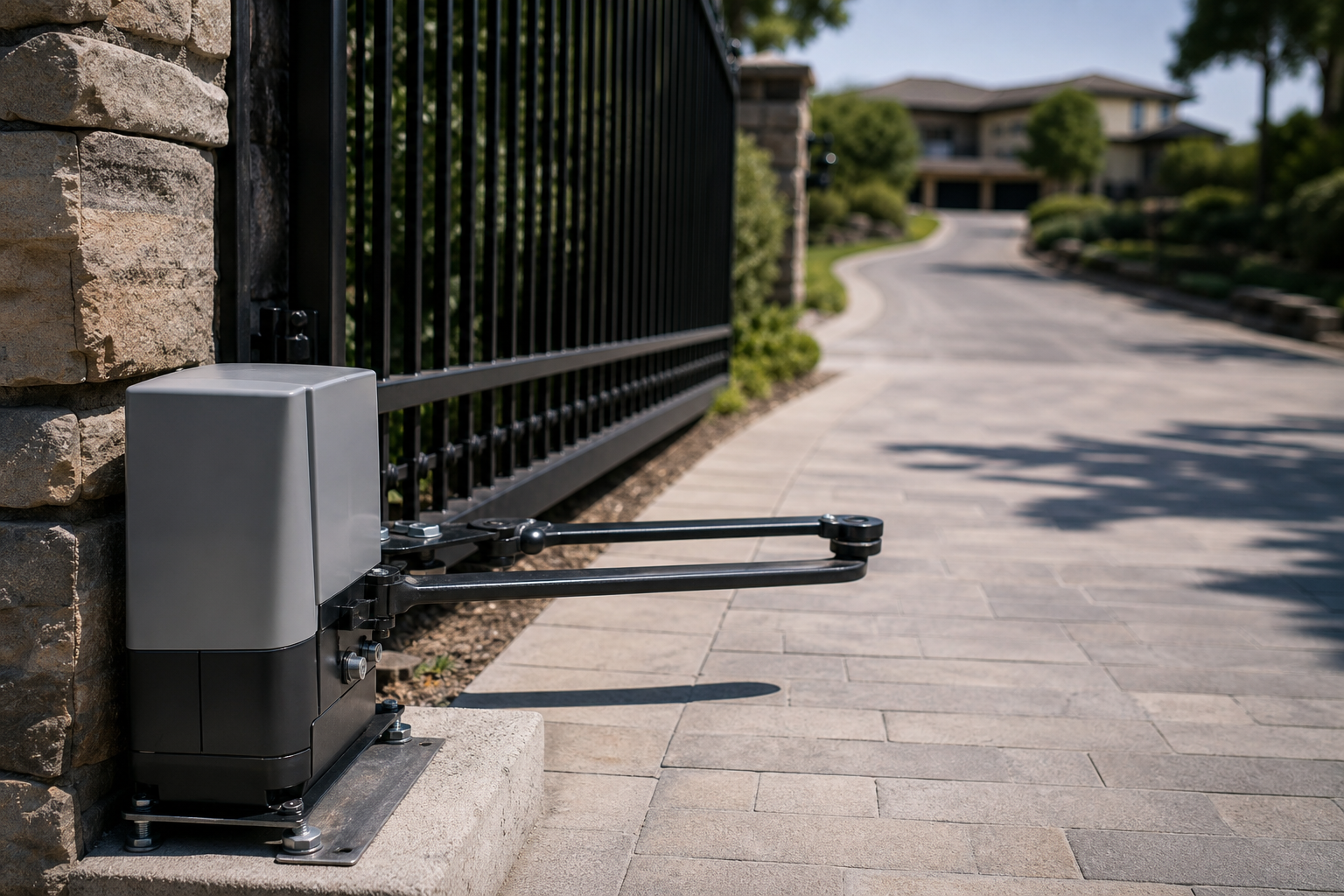
5 Mistakes to Avoid With Gate Motor & Opener
The five most damaging mistakes with gate motors and openers are: setting force limits once and never adjusting them as the gate ages, using weatherproofing specs that don’t match Los Angeles’s specific climate zone, neglecting entrapment sensor alignment after any gate adjustment, ignoring the transformer or battery backup until it fails, and installing an opener with the wrong duty-cycle rating for actual daily use. Each of these errors starts small and compounds over years. If you’d rather have a trained eye assess your system, call Ironworks Gate Co. at (833) 754-7503 - estimates are free, and most diagnostic visits are completed in a single trip.
The gate motor that just stopped working in your driveway probably gave you three warnings you didn’t recognize as warnings: a slightly slower open cycle six months ago, a remote that needed two presses instead of one, and a hum that lasted a beat too long before the gate moved. We’ve been repairing and installing gate automation across Los Angeles since 2013, and the pattern is remarkably consistent. The failure that seems sudden was almost always set in motion by a decision made years earlier - usually one of these five.
1. Setting Force Limits Once and Walking Away
This is the single most common cause of premature motor burnout we see in Los Angeles, from Pacific Palisades to Pasadena. When a gate opener is first installed, the technician sets the force limits to match the gate’s weight and friction at that moment. The gate is new, or newly serviced, and everything moves freely. Six months later, hinges have settled. A year later, maybe there’s a slight sag from thermal expansion through a San Fernando Valley summer. The gate now needs more force to start moving, but the motor is still straining against the original setting.
The motor doesn’t complain audibly at first. It just works harder, draws more amperage, and runs hotter. Over time, the gearbox wears, the thermal overload trips more frequently, and eventually the control board fails. Homeowners call us thinking they need a new motor when what they needed was a force-limit adjustment six months prior.
We check and recalibrate force settings on every gate motor and opener service call in Los Angeles. It’s a ten-minute procedure that can add years to a unit’s life. If your opener hasn’t had its force limits checked since installation, it’s overdue.
2. Using One Weatherproofing Spec for All of Los Angeles
Los Angeles isn’t one climate. The marine layer that rolls into Santa Monica and Redondo Beach brings salt air and persistent moisture that corrodes conduit fittings and junction box seals. Move twenty miles inland to Glendale or Burbank and you’re in dry heat that cracks gaskets and UV-degrades cable insulation. A junction box rated NEMA 3R might survive inland but will fail prematurely within sight of the Pacific.
We see this mistake most often with installations done by general contractors who don’t specialize in gate automation. They use whatever conduit and boxes they have on the truck, apply standard silicone, and move on. Eighteen months later, we’re replacing a control board because moisture wicked through a compromised seal and corroded the terminal block.
The fix is specific: in coastal zones, we specify NEMA 4X stainless enclosures, dielectric grease on all terminations, and conduit drains at low points. Inland, we prioritize UV-resistant flexible conduit and heat-rated gaskets. The cost difference at installation is minimal. The cost of replacing a water-damaged Linear or Viking control board is not.
3. Forgetting That Entrapment Sensors Move When Gates Move
Every automatic gate in Los Angeles is required to have entrapment protection - photo eyes, edge sensors, or current sensing, depending on the system type and install date. Here’s what most homeowners don’t know: any adjustment to the gate panel changes the sensor alignment. If you adjust a hinge, trim a dragging edge, or even replace a worn roller, the photo eye path shifts slightly. The sensor may still appear to have its green light, but the detection zone has moved. The gate now closes with a compromised safety system, and the homeowner has no idea.
We found this exact situation last month on a job in Los Feliz. The homeowner had adjusted a sagging gate panel himself - a reasonable DIY fix. The gate closed more smoothly afterward, so he assumed all was well. The photo eyes were now misaligned by roughly three inches, enough that a child or pet in the wrong spot would not trigger the reverse. We realigned the sensors, tested the full cycle, and documented the safety check. It took twenty minutes.
After any gate adjustment, test the entrapment system with a solid object, not just your hand. Better still, have a technician verify it. Our gate repair service in Los Angeles includes full safety-system testing on every visit - no extra charge, no exceptions.
4. Ignoring the Transformer or Battery Backup
This is the most misdiagnosed failure pattern in gate automation. The gate stops working. The homeowner assumes motor. The technician who doesn’t specialize in gate systems often agrees. A new motor is quoted, ordered, installed - and the same problem returns in weeks.
The actual culprit is usually the low-voltage transformer or the battery backup. Transformers degrade gradually, delivering voltage that reads acceptable at rest but collapses under load. Battery backups - required on all new Los Angeles installations since 2019 - have a finite lifespan, typically three to five years. When they fail, they can drag down the entire control system or cause erratic behavior that looks like a motor fault.
We carry load-testing equipment for both components on every truck. Before we recommend any motor replacement, we verify that the power supply is clean and the battery can hold charge under load. On a recent call in the Hollywood Hills, we saved a homeowner a $1,200 motor replacement by replacing a $90 transformer and a $140 battery. That’s the difference between a gate specialist and a generalist.
When to call a pro: If your gate behaves intermittently - works fine in the morning, stalls in the afternoon, responds to the remote only sometimes - the problem is almost certainly electrical, not mechanical. Don’t replace the motor until the power path is verified.
Related services in Los Angeles: Gate Motor & Opener in Los Angeles
5. Installing the Wrong Duty-Cycle Rating for Real-World Use
Duty cycle is the percentage of time a motor can run without overheating, expressed over a ten-minute window. A 20% duty cycle means two minutes of run time, eight minutes of rest. Residential openers are typically rated at 20-30%. Light commercial units hit 50-75%. The rating assumes a specific gate weight and length, at a specific speed, in moderate ambient temperature.
Here’s where it goes wrong in practice. A Los Angeles homeowner installs a standard residential opener on a heavy wrought-iron gate with ornate scrollwork - common in Hancock Park or the older Pasadena neighborhoods. The gate looks residential, but it weighs what a light commercial gate weighs. The motor is now running at or beyond its thermal limit on every cycle. The homeowner uses it twenty times a day. The ambient temperature in August is 95 degrees. That 20% duty cycle is now a fiction.
The motor overheats, the thermal protector trips, and the homeowner resets it. Eventually the thermal protector fails closed, the motor burns, and the control board follows. We’ve replaced Ghost Controls and DoorKing units that failed this way - not because the brands are poor, but because the unit was never the right match for the application.
Honest assessment of your actual usage matters. Count your cycles for a week. Weigh your gate or have it weighed. Factor in your local heat. Then size the opener with margin, not just adequacy. At Ironworks Gate Co. home, we spec for the gate you have and the life you live, not the gate and life a catalog assumes.
Key Takeaways
- Force limits need rechecking as gates age - this single step prevents more motor failures than any other maintenance item.
- Coastal Los Angeles and inland Los Angeles need different weatherproofing specs; one size fits none.
- Any gate adjustment requires sensor realignment; the green light alone does not prove safety.
- Intermittent gate behavior usually signals power supply or battery failure, not motor failure - test before replacing.
- Duty-cycle ratings are theoretical; real-world sizing requires honest accounting of gate weight, cycle count, and local climate.
The Bottom Line
Gate motors fail predictably because the conditions that kill them build gradually and invisibly. The homeowner who understands these five mistakes can prevent most failures before they happen, or at least recognize the early warnings and act before the repair becomes a replacement. We’ve been doing this work in Los Angeles for over forty-two years, and the motors that last are the ones that were installed with foresight and maintained with attention.
If you’re in Los Angeles and your gate is showing any of the warning signs we’ve described - slower cycles, intermittent response, unusual hums, or a recent adjustment you haven’t had checked - call Ironworks Gate Co. at (833) 754-7503. We’ll send a background-checked, uniformed technician who will diagnose the actual problem, quote an upfront price before turning a single bolt, and back the work with our written 90-Day Done Right Promise. Estimates are free, and most repairs are completed in a single visit.
Frequently Asked Questions
Force limits should be checked annually, and immediately after any gate adjustment, hinge replacement, or noticeable change in gate movement. In Los Angeles, we also recommend a check after any significant seismic event, since ground shift can alter gate alignment and loading. Call (833) 754-7503 to schedule a force-limit check with our seasonal tune-up - it’s $89 and includes full safety testing.
This pattern almost always indicates a thermal or voltage issue, not a mechanical one. As ambient temperature rises through the day, a failing transformer delivers less stable voltage, or a weak battery backup cannot maintain system voltage under load. The motor may also be hitting thermal overload if it’s undersized for your gate weight. We test the complete power path before recommending any motor replacement - call (833) 754-7503 for a free diagnostic.
You can attempt sensor realignment, but we don’t recommend relying on your own assessment for safety-critical entrapment protection. Even a small misalignment - half an inch - can create a blind spot where the sensor fails to detect a person or pet. After any DIY adjustment, have a trained technician verify the full safety cycle. Our gate repair visits in Los Angeles include this verification at no additional charge.
Correct sizing requires four facts: your gate’s actual weight, its length, your typical daily cycle count, and your local climate conditions. Compare these against the opener’s rated capacity with margin - we typically spec at 150% of calculated load for residential gates in Los Angeles heat. If you don’t know your gate weight or you’re near the rated limit, call (833) 754-7503. We’ll measure, calculate, and tell you honestly whether your current unit is adequate or overdue for an upgrade.
Written by the team at Ironworks Gate Co., serving Los Angeles since 2013.
Need Gate Repair Help?
Call Ironworks Gate Co. - licensed & insured, here with fast after-hours help in Los Angeles.
(833) 754-7503